When Los Angeles Families Face Estate and Trust Disputes
I’m Michael Hackard, founder of Hackard Law. Over five decades of law practice, I have had one guiding goal: to build an estate, trust, and elder financial abuse firm that my own family would be proud to hire. Los Angeles has been central to that mission from the very beginning. I handled my first Los Angeles case more than forty years ago, and the city has only grown in complexity and consequence since then. Today, Los Angeles ranks as the fourth richest city in the world and the entertainment capital of the country – and with that wealth comes a steady stream of high-stakes inheritance disputes, trust conflicts, and elder financial abuse cases that devastate families.
Hackard Law provides services to families in the San Francisco Bay Area, Sacramento, and Los Angeles. In addition to producing over 1,000 instructional videos that have been viewed by over seven million people, I have published four books on inheritance protection. When the stakes are high and the opposition is well-funded, my firm’s sole purpose is to support heirs, beneficiaries, and victims of elder abuse.
Hackard Law provides contingency fee representation – no upfront costs for qualified cases. If your family is facing an estate or trust dispute in Los Angeles, call us today at (916) 313-3030.
Quick Summary
Los Angeles families dealing with estate and trust conflicts need litigation counsel who understands both the legal landscape and the human cost of these disputes. Hackard Law brings decades of California trust and estate litigation experience to clients throughout Southern California.
In Los Angeles, estate and trust litigation entails substantial assets and intricate legal processes.
Elder abuse victims, heirs, and beneficiaries frequently confront powerful opponents.
Regardless of the amount of money needed up front, experienced legal counsel is accessible
through contingency-fee representation.
Compared to waiting, early legal intervention frequently yields better results.
Hackard Law has litigated cases across Los Angeles County and throughout California.
Why Los Angeles Estate Disputes Are Different
Los Angeles is not a typical city, and its estate disputes reflect that. The concentration of wealth – in real estate, entertainment royalties, business interests, and investment portfolios – means that trust and estate conflicts here often involve assets of extraordinary value. A single-family home in certain LA neighborhoods can be worth more than the entire estate in many other parts of the country.
That concentration of value raises the stakes for every party involved. Trustees who mismanage assets, family members who exert undue influence over a vulnerable elder, and personal representatives who act in their own interest rather than the estate’s – all of these patterns appear with regularity in Los Angeles probate courts. Hackard Law has litigated these disputes for decades, and the Los Angeles estate litigation practice reflects that depth of experience.
The Human Cost of Inheritance Conflicts
Behind every estate dispute is a family. Sometimes it is a parent who spent a lifetime building something meaningful, only to have it diverted at the end of life through manipulation or fraud. Sometimes it is adult children who discover – only after a parent’s death – that the estate they expected to inherit has been quietly transferred to a caregiver, a new romantic partner, or a sibling who isolated the parent in their final years.
The financial toll grows with every month of delay. And the fracture that runs through a family during contested litigation often runs too deep for any judgment to mend. That is why I believe early intervention matters – not just legally, but for the family’s long-term wellbeing. Understanding what California beneficiaries can do when a trustee delays distributions without cause is often the first step toward reclaiming what rightfully belongs to the family.
Case Pattern: A family member serving as a successor trustee for a trust in the Los Angeles region frequently delayed payments to siblings, citing ongoing administrative costs. Funds had been transferred to the trustee’s personal accounts over a number of years. As per the forensic examination of trust accounts conducted after legal action was started. The conclusion is that mismanagement can be discovered before the harm is irreparable through quick legal action and thorough accounting.
What Hackard Law Does for Los Angeles Families
Hackard Law is a litigation firm. We do not draft estate plans or prepare tax returns. What we do – and what we do with singular focus – is fight for heirs, beneficiaries, and elder abuse victims in California courts. That focus matters. Litigation is a distinct discipline, and the families we represent deserve counsel whose practice is built around it.
For Los Angeles clients, that means navigating the LA Superior Court’s probate division, understanding the local rules and judicial temperament that shape outcomes there. And bringing the kind of preparation that complex, high-value cases demand. The 8 stages of trust and estate litigation – from initial investigation through trial or settlement – require consistent attention and strategic discipline at every step.
Hackard Law also understands that many families cannot afford hourly litigation rates when facing a well-funded trustee or an opposing party backed by estate resources. Contingency fee representation changes that equation. A detailed explanation of how contingency fees work in California trust litigation is available in our contingency fee guide.
Case Pattern: An elderly Los Angeles resident updated her trust multiple times in the final two years of her life, each amendment increasing the share going to a newly introduced companion. Family members who had been close to her for decades were progressively excluded. After her death, litigation revealed a pattern consistent with isolation and undue influence. The outcome theme: documented changes in behavior, access, and estate documents can form the foundation of a strong undue influence claim.
Elder Financial Abuse in Los Angeles
California law provides some of the most powerful protections in the nation for elder financial abuse sufferers. Those protections include the possibility of double damages and attorney fee recovery in successful cases – remedies that reflect the legislature’s recognition of how serious this problem is. Los Angeles, with its large elder population and high concentration of wealth, sees a disproportionate share of these cases.
The patterns are consistent: a caregiver who gradually assumes control of finances, a family member who leverages a dependent relationship to redirect assets, or a new acquaintance who appears during a period of cognitive decline and engineers changes to estate documents. These are not rare events. They are the cases that estate theft in Los Angeles litigation addresses directly.
For families who suspect something has gone wrong – but are not yet certain – early consultation with a litigation attorney can clarify whether the facts support a legal claim and what steps should be taken to preserve evidence.
Key Definitions
Trustee: The person or institution responsible for managing trust assets according to the trust’s terms and California law.
Beneficiary: A person entitled to receive distributions from a trust or estate.
Undue influence: Pressure or manipulation that overcomes a person’s free will, often used to change estate documents in favor of the influencer.
Contingency fee: A fee arrangement in which the attorney is paid only if the case is successfully resolved, typically as a percentage of the recovery.
Probate: The court-supervised process of validating a will and administering an estate.
Elder financial abuse: The wrongful taking, concealment, or appropriation of an elder’s financial assets, prohibited under California Welfare and Institutions Code Section 15610.30.
Successor trustee: The person or entity who takes over trust administration after the original trustee dies, resigns, or is removed.
Trust contest: A legal challenge to the validity of a trust document, often based on lack of capacity or undue influence.
Fiduciary duty: The legal obligation of a trustee or executor to act in the best interests of the beneficiaries.
Accounting: A formal report of trust or estate assets, income, expenses, and distributions that a trustee is required to provide.
What to Do Next
Early warning indicators include a trustee who avoids communication. Other can be unexplained changes to estate documents, or new people gaining unusual access to an elderly person.
As soon as a death or disagreement occurs, obtain copies of trust documents, amendments, and any powers of attorney.
Before consulting an attorney, try to avoid confronting a suspected bad actor directly as this may alert them to destroy or transfer assets.
Document everything: dates, conversations, financial transactions, and changes in the elder’s condition or relationships.
Look into whether California’s elder financial abuse statutes apply – they can provide stronger remedies than standard trust litigation alone.
Explains why acting quickly in estate and trust disputes leads to better outcomes.
Frequently Asked Questions
Hackard Law handles trust contests, trustee removal, elder financial abuse claims, undue influence cases, and beneficiary rights disputes throughout Los Angeles County. The firm focuses exclusively on litigation – not estate planning – so every resource is directed toward fighting for clients in court or in settlement negotiations.
Under a contingency fee arrangement, Hackard Law is paid only if your case results in a recovery. There are no upfront legal fees for qualified cases. This allows heirs, beneficiaries, and elder abuse victims to pursue legitimate claims without the barrier of hourly litigation costs.
Timelines vary significantly depending on the complexity of the case, the assets involved, and whether the matter resolves through settlement or proceeds to trial. Many cases resolve within one to two years, though complex matters with multiple parties or significant assets can take longer.
Courts look at the elder’s vulnerability, the influencer’s opportunity and access, whether the influencer had motive, and whether the resulting estate plan is consistent with the elder’s prior wishes. Medical records, financial records, witness accounts, and communications are all potentially important.
Yes. A trust amendment can be challenged on grounds of lack of capacity, undue influence, or fraud. The closer the amendment is to the date of death – particularly if the elder was ill or isolated – the stronger the factual basis for a challenge may be. Acting promptly after discovering the amendment is important given applicable deadlines.
About the Author
Michael Hackard is the founder of Hackard Law, a California trust and estate litigation firm with more than five decades of experience protecting the inheritance rights of families across Sacramento, the San Francisco Bay Area, and Los Angeles. He is the author of four published books on inheritance protection and has produced more than 1,000 educational videos with over seven million views.



 (916) 313-3030

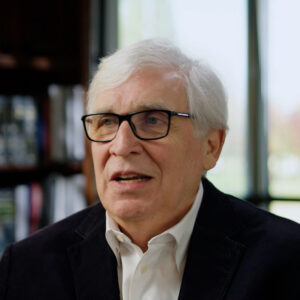 Michael Hackard is the founder of Hackard Law, a California trust and estate litigation firm with more than five decades of experience protecting the inheritance rights of families across Sacramento, the San Francisco Bay Area, and Los Angeles. He is the author of four published books on inheritance protection and has produced more than 1,000 educational videos with over seven million views.