


 (916) 313-3030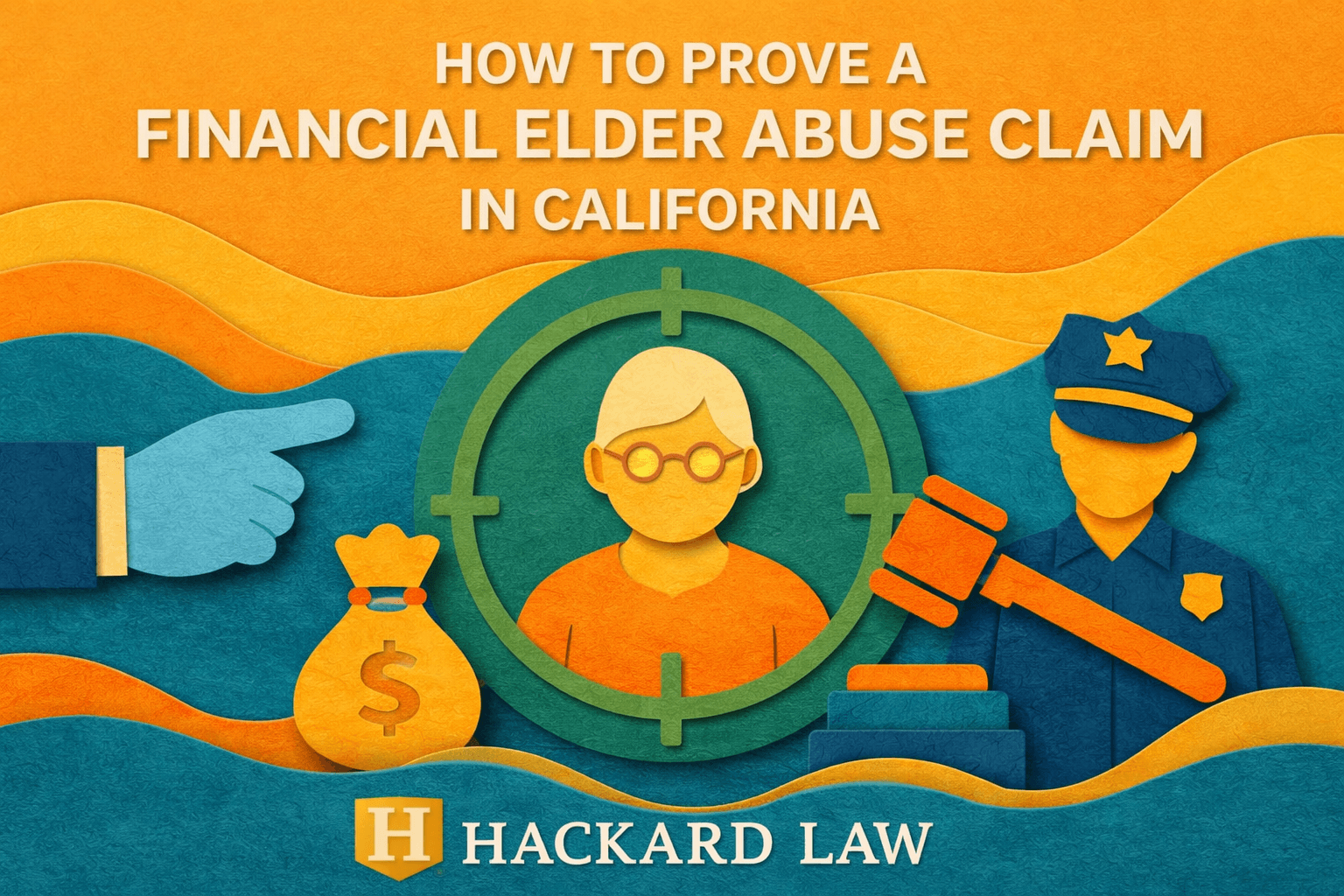
How to Prove a Financial Elder Abuse Claim in California | Hackard Law

Financial Elder Abuse Claims Are Surging Across California
Financial elder abuse claims have surged across California in recent years, and the families left behind often face a daunting question: how do you prove abuse when the victim is no longer alive to testify? I am Michael Hackard, founder of Hackard Law, and over five decades of practicing trust and estate litigation, I have guided thousands of families through exactly this challenge. My firm represents heirs, beneficiaries, and elder abuse victims in Sacramento, the San Francisco Bay Area, and Los Angeles.
I have written four published books on inheritance protection, each designed to give families the knowledge they need before stepping into a courtroom. I have also produced more than 1,000 educational videos — now exceeding seven million views — because families deserve clear answers, not legal jargon. The reality is that proving a financial elder abuse claim after the elder has passed requires disciplined preparation, strong evidence, and a litigation team that understands both the statute and the courtroom dynamics that drive results.
Hackard Law provides contingency fee representation, meaning qualified cases require no upfront costs — the firm advances all litigation expenses and only recovers fees when the case succeeds.
If your family suspects financial elder abuse, contact Hackard Law at (916) 313-3030 for a free consultation.
Quick Summary: Proving Financial Elder Abuse After Death
California’s Elder Abuse and Dependent Adult Civil Protection Act provides families with a robust civil remedy, but its success depends on meeting certain factual requirements and the appropriate burden of proof. Even after the elder has passed away, a well-prepared case can recover assets and hold abusers accountable.
- The plaintiff must prove that someone took, hid, appropriated, or obtained the elder’s property through wrongful use, fraud, or undue influence.
- The burden of proof in a civil elder abuse case is preponderance of the evidence — more likely true than not.
- Upon finding liability, the court is required to award reasonable attorney fees and costs to the prevailing plaintiff.
- Higher standards of proof apply when punitive damages are sought.
- Abusers typically face a significant credibility gap that works against them at trial.
The Factual Elements of a California Financial Elder Abuse Claim
California jury instructions outline the factual elements a plaintiff must establish. While these instructions do not cover every potential scenario under the Elder Abuse Act, they provide the basic framework for litigation.
The first component necessitates demonstrating that someone—or someone acting on that person’s behalf—took, concealed, appropriated, acquired, or kept the decedent’s belongings. By design, this component is broad. It records direct theft, covert transfers, unauthorized account withdrawals, and theft of property under the guise of gifts.
The second requirement is simple: the victim must have been 65 years of age or older when the conduct occurred. At this age threshold, California law establishes a clear line, and the statutory protections take full effect.
The third element relates to intent. The plaintiff must prove that the taking was done for an improper use, under duress, or with the intent to deceive. Here, the battle is frequently at its fiercest. Abusers rarely leave a signed confession.
Instead, the evidence consists of witness statements, bank records, medical records, and patterns of isolation and control.
The fourth component necessitates evidence that the behavior caused harm to the deceased. The elder’s well-being or the inheritance rights of surviving family members may be directly impacted by financial loss, diminished estate value, or lost property.
Case Pattern: The Disappearing Bank Accounts
An elderly parent’s bank accounts are routinely depleted during their last few months of life by a caregiver or close relative who has access control over the elder. The surviving children learn that the accounts are empty after the elder passes away. A trail of the elder’s unauthorized withdrawals, forged signatures, and transfers is exposed through litigation.
The Burden of Proof: Preponderance of the Evidence
Financial elder abuse must be proven by a preponderance of the evidence in civil court. Compared to the “beyond a reasonable doubt” standard used in criminal cases, this standard is much lower. To put it simply, there is more evidence on one side than the other. The plaintiff has satisfied the burden if a judge or jury finds that abuse was more likely to have occurred than not.
This standard matters enormously for families. It means that even without a smoking gun — even without the elder’s own testimony — a case built on documentary evidence, circumstantial patterns, and credible witness accounts can prevail. California courts examine the totality of the evidence, including financial records, documented patterns of exploitation, and the timeline of events surrounding the elder’s decline and death.
However, the standard is raised when a plaintiff requests punitive damages. Punitive damages have a higher standard, requiring more convincing proof of oppression, fraud, or malice. Each case is assessed by Hackard Law to ascertain whether the evidence supports both punitive and compensatory claims.
Why Abusers Face a Credibility Gap at Trial
As a practical matter, those who commit financial elder abuse carry a heavy credibility burden into the courtroom. Judges and jurors view the evidence through a perspective that is inherently skeptical of someone who controlled an elderly person’s finances and emerged with the lion’s share of assets.
Abusers usually struggle to produce positive facts supporting their version of events. They may claim the elder made voluntary gifts, but lack independent witnesses. Also, they may point to estate planning documents, but those documents were executed during periods of cognitive decline. They may argue that the elder wanted them to have the property, but they cannot explain why the elder’s other children were cut out at the last minute.
This credibility gap is a significant strategic advantage for plaintiffs. A well-prepared litigation team exploits every inconsistency, every missing document, and every implausible explanation. The civil remedies available under California law — including double damages and attorney fee recovery — give families real leverage to pursue justice.
Case Pattern: The Last-Minute Trust Amendment
A typical pattern is for a trust amendment to be made weeks or months prior to the elder’s passing, transferring assets to a single person who had kept the elder apart from other family members. The amendment is contested by the surviving heirs on the grounds of incapacity and undue influence. The elder had a dementia diagnosis, according to discovery, and the lawyer who drafted the amendment never carried out an impartial evaluation of the elder’s desires.
How California Law Rewards Successful Plaintiffs
One of the most powerful features of California’s Elder Abuse Act is its mandatory fee-shifting provision. Once a plaintiff proves financial elder abuse by a preponderance of the evidence, the court must award reasonable attorney fees and costs. This is not discretionary — it is a statutory requirement.
This provision changes the economics of litigation. Families who might otherwise be unable to afford a prolonged legal battle can pursue claims knowing that a successful outcome includes recovery of their legal costs. Combined with contingency fee representation, this creates a pathway for families of all financial backgrounds to hold abusers accountable.
Beyond attorney fees, successful plaintiffs may recover the value of the property taken, lost income or investment returns, and in appropriate cases, punitive damages designed to punish particularly egregious conduct. California law also provides for early legal intervention in cases where abuse is suspected but the elder is still alive, allowing families to act before assets disappear entirely.
Building the Evidence: What Families Should Gather
Proving financial elder abuse after the elder’s death requires assembling a comprehensive evidentiary record. The strongest cases combine multiple categories of evidence that together paint an unmistakable picture of exploitation.
Financial records form the backbone of most cases. Bank statements, brokerage records, real estate transfer documents, and credit card statements reveal the flow of assets. Sudden changes in spending patterns, large unexplained withdrawals, and transfers to unfamiliar parties all raise red flags that courts take seriously.
Medical records establish the elder’s cognitive state during the period of alleged abuse. A diagnosis of Alzheimer’s disease, dementia, or other cognitive impairment can undermine any claim that the elder voluntarily transferred assets. Medical records also document the elder’s physical dependency, which often correlates with vulnerability to manipulation.
Witness testimony from family members, friends, neighbors, and professionals who interacted with the elder provides context that documents alone cannot supply. Testimony about the elder’s expressed wishes, the abuser’s behavior, and the elder’s increasing isolation can tip the scales in the plaintiff’s favor. Families should read about guarding against elder financial abuse to understand the warning signs.
Key Definitions
- Financial Elder Abuse: Taking, hiding, appropriating, obtaining, or retaining an elder’s property for wrongful use, with intent to defraud, or by undue influence under California’s Elder Abuse and Dependent Adult Civil Protection Act.
- Preponderance of the Evidence: The civil burden of proof requiring that something is more likely true than not true — essentially that the evidence tips in the plaintiff’s favor.
- Clear and Convincing Evidence: A higher burden of proof required for punitive damages, demanding evidence that is highly and substantially more likely to be true than untrue.
- Undue Influence: Excessive persuasion that overcomes a person’s free will, often involving isolation, dependency, and manipulation of a vulnerable elder.
- Mandatory Attorney Fee Award: Under California’s Elder Abuse Act, once liability is proven, the court must award reasonable attorney fees and costs to the prevailing plaintiff.
- Punitive Damages: Additional damages awarded to punish particularly malicious or oppressive conduct, beyond the actual financial harm suffered.
- Decedent: The person who has died — in elder abuse claims, the elder whose property was taken.
- Credibility Gap: The inherent disadvantage an accused abuser faces at trial when the evidence shows they controlled an elder’s finances and benefited disproportionately.
What to Do Next if You Suspect Financial Elder Abuse
- Gather all available bank statements, financial records, and account documents covering the elder’s final years of life.
- Collect medical records documenting the elder’s cognitive and physical condition during the period of suspected abuse.
- Identify witnesses — family members, friends, caregivers, neighbors — who observed the elder’s condition and the suspected abuser’s behavior.
- Preserve all communications, including emails, text messages, and letters, between the elder, the suspected abuser, and family members.
- Review any trust or estate documents that were created or amended during the period of suspected abuse.
- Do not confront the suspected abuser or alert them that litigation is being considered.
- Consult with a California trust and estate litigation attorney who handles financial elder abuse cases on a contingency fee basis.
- Act promptly — statutes of limitations apply to elder abuse claims and delay can jeopardize your rights.
Call Hackard Law at (916) 313-3030 to discuss your family’s situation and learn whether your case qualifies for contingency fee representation.
CALL THE SAGE | When Experience Matters, Families Listen
📚 50 years California trust, estate & elder financial abuse litigation
⚖️ We represent heirs, beneficiaries, and elder abuse victims
🎥 1,000+ educational videos | 7 million+ views | 4 published books
🎯 “After thousands of cases, I see the pattern others miss.”
CONTINGENCY REPRESENTATION — No Win, No Fee
Throughout California: Sacramento | Los Angeles | Bay Area
📞 CALL THE SAGE: (916) 313-3030
Subscribe for weekly insights on:
- Elder financial abuse warning signs and prevention
- Trust and estate litigation strategies
- Inheritance protection for California families
- Family protection strategies
When your inheritance is under attack, Call The Sage.
Hackard Law | 10640 Mather Blvd, Mather CA 95655
Attorney Advertisement | Michael Hackard, State Bar #71067
RELATED VIDEOS
Elder Financial Abuse in California | Vulnerabilities
Directly mirrors the blog’s California-specific focus and its discussion of how cognitive decline, isolation, and dependency create vulnerabilities that abusers exploit — key factual elements in proving a financial elder abuse claim.
The Sick and Dying | Targets of Elder Financial Abuse
Perfectly aligned with the blog’s central scenario — proving financial elder abuse after the elder has died — as it addresses how the sick and dying are specifically targeted, reinforcing the evidentiary patterns the blog describes.
Compensatory Damages for Suffering | Elder Financial Abuse
Directly supports the blog’s detailed section on damages — compensatory recovery, punitive damages, and mandatory attorney fee awards — giving readers a deeper look at what successful plaintiffs can recover.
How to Protect Families from Elder Financial Abuse | CA Trust Litigation
Complements the blog’s actionable ‘What to Do Next’ section and its trust litigation context, offering families a California-specific overview of protective legal strategies.
Elder Financial Abuse in California | A Growing Threat to Seniors
Reinforces the blog’s opening point that financial elder abuse claims are surging across California, providing readers with broader context about the scope of the problem affecting seniors statewide.
The Cost of Elder Financial Abuse | California Estate & Trust Litigation
Ties directly to the blog’s discussion of financial harm, the economics of litigation, and the mandatory fee-shifting provision under California’s Elder Abuse Act — helping readers understand the full financial stakes of these cases.
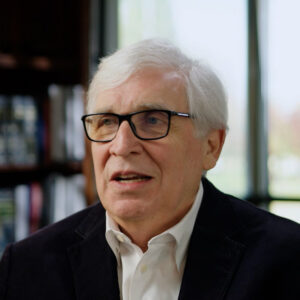 Michael Hackard is the founder of Hackard Law, a California trust and estate litigation firm with more than five decades of experience protecting the inheritance rights of families across Sacramento, the San Francisco Bay Area, and Los Angeles. He is the author of four published books on inheritance protection and has produced more than 1,000 educational videos with over seven million views.