What Contingency Fees Mean for California Families
I’m Michael Hackard, founder of Hackard Law. I handled my first estate litigation case more than forty years ago – a disputed will that taught me more about family conflict, grief, and the stakes of inheritance than any textbook could. Since then, I have worked on several thousand cases involving trusts, estates, and elder financial abuse across California, from Sacramento and the San Francisco Bay Area to Los Angeles. I have also written four published books on inheritance protection and produced more than 1,000 educational videos that have reached over seven million viewers.
Throughout those decades, one truth has remained constant: the families who need litigation most are mostly those who can’t afford it upfront. That’s exactly why contingency fee representation sits at the core of my practice.
Hackard Law provides contingency fee representation for qualified trust, estate, and elder financial abuse cases – meaning there are no upfront costs to you. If you have questions about your situation, call us today at (916) 313-3030.
Quick Summary
Heirs and beneficiaries can pursue trust and estate claims under contingency fee agreements without having to pay legal fees unless the case is resolved in their favor. As a result, those who have unlawfully taken assets are on an even playing field.
Contingency fees are a percentage of what is recovered – no recovery, no fee.
These arrangements align the attorney’s interests directly with the client’s
Trust, estate, and elder financial abuse cases in California often qualify.
Hackard Law has handled thousands of contingency cases across California.
Beneficiaries do not have to face well-funded opposition alone.
How Contingency Fees Work in California
Under California law, a contingency fee agreement means the client pays attorney fees only if the case is resolved, settled, or won. The fee is calculated as a percentage of the recovery. If the case is unsuccessful, the client owes no attorney’s fees.
This structure is especially important in trust and estate litigation, where one side – often a trustee or a person who has already taken control of assets – may have access to estate funds to pay their own attorneys. Beneficiaries, by contrast, frequently have no such resource. A contingency arrangement removes that imbalance. You can learn more about how this works in Hackard Law’s contingency fee guide for California trust and estate litigation.
The percentage varies according to case type, complexity, and litigation stage. What matters the most is that the attorney’s financial outcome is linked to yours. While providing a strong incentive for thorough, committed representation.
Why Trust and Estate Cases Lend Themselves to Contingency
Not every legal matter is fit for contingency representation. Personal injury claims and certain financial disputes fit this model well because the damages are measurable and recoverable. Trust and estate litigation shares those qualities.
When a trustee misappropriates assets, when a will is the product of undue influence, or when an elder’s estate is drained through financial exploitation, the harm is real and quantifiable. Courts can order the return of assets, surcharge a trustee, or set aside a fraudulent transfer. These outcomes translate into recoverable value, which is exactly what makes contingency representation viable.
Hackard Law has litigated many of the most common trust and estate disputes families face, including will contests, trustee removal, elder financial abuse, and inheritance theft. Each of these case types can carry significant recoverable value for the families harmed.
Case Pattern: A family member discovers that a sibling, acting as successor trustee, transferred real property out of the trust to themselves shortly after the settlor’s death. The remaining heirs had no funds to retain counsel. Through a contingency arrangement, they were able to pursue the claim, and the property transfer was ultimately unwound through litigation.
Aligning Interests: The Attorney as a Partner in Recovery
One of the most underappreciated aspects of contingency representation is what it does to the attorney-client relationship. When a lawyer’s fee depends entirely on the outcome, that lawyer has every reason to work as hard as possible on your behalf. The interests of the attorney and client become inseparable.
This is not simply a financial arrangement – it is a commitment. Michael Hackard’s approach to contingency cases reflects that commitment. From the first conversation through discovery, depositions, and trial or settlement, the goal is recovery for the client. You can read more about Michael Hackard’s background and approach to understand what that commitment looks like in practice.
For heirs, beneficiaries, and elder abuse victims who feel powerless against a well-funded trustee or a family member who has seized control of an estate, knowing that your attorney’s success is tied to yours can make an enormous difference – not just practically, but emotionally.
Case Pattern: An elderly woman’s trust was amended several times in her final months of life, with each change reducing distributions to her children. And increasing the share going to a paid caregiver. The kids’ resources were scarce. They were able to present a thorough undue influence challenge thanks to a contingency fee arrangement, which ultimately led to the original trust terms being restored.
Who Qualifies for Contingency Representation
It is crucial to comprehend why not all cases are eligible for contingency representation. Contingency attorneys invest their time and resources in the outcome of their cases. To certify that investment, the case must have sufficient merit and recoverable value.
Cases that tend to qualify include those involving trustee misconduct, misappropriation of trust or estate assets, elder financial abuse, undue influence on a will or trust, and fraudulent transfers of property. If you are unsure whether your situation might qualify, the right step is a direct conversation with an attorney.
For beneficiaries navigating trustee delays or stonewalling, the question of how to fund litigation is often the first barrier. Contingency representation removes that barrier when the case qualifies. Families in Sacramento dealing with will and trust disputes can also find region-specific information through Hackard Law’s Sacramento contested will and trust resources.
The Human Purpose Behind the Legal Strategy
For decades, I have stood with families at some of the hardest moments of their lives – after a parent’s death, after discovering that an inheritance was stolen, after realizing that someone they trusted used that trust as a weapon. The financial toll grows with every passing month. The fracture in family relationships often runs too deep for any judgment to mend.
But a steadfast commitment to the truth restores what dishonesty attempted to steal. That is the reason this work is important, not just a legal tactic. Discovery, forensic analysis, and the relentless pursuit of accountability are not abstract processes. They are the tools that give families a chance to reclaim what was taken from them and to honor the wishes of the people they loved.
Contingency fee representation is one of the most important ways Hackard Law makes that pursuit accessible. If you cannot afford to fight, justice becomes hypothetical. We work to make it real. For additional perspective on how contingency arrangements bridge the representation gap in trust litigation, that resource is worth reading before your first call.
Key Definitions
Contingency fee: An attorney fee arrangement where payment is owed only if the case is won or settled, calculated as a percentage of the recovery.
Fee agreement: A written contract between attorney and client specifying the terms of compensation, including the contingency percentage.
Recovery: The total amount obtained through settlement, judgment, or other resolution of a legal claim.
Trust litigation: Legal disputes involving the administration, validity, or distribution of a trust.
Undue influence: Improper pressure exerted on a person that overrides their free will, often used to change estate documents.
Elder financial abuse: The illegal or improper use of an elder’s funds, property, or assets, recognized as a distinct cause of action under California law.
Trustee surcharge: A court-ordered remedy requiring a trustee to personally compensate the trust for losses caused by their misconduct.
Fraudulent transfer: A transfer of assets made with the intent to defraud creditors or rightful heirs, which courts can reverse.
Successor trustee: The person or institution designated to manage a trust after the original trustee dies or becomes incapacitated.
Standing: The legal right to bring a claim in court, typically required of heirs, beneficiaries, or interested parties in estate matters.
What to Do Next
Look for signs that trust or estate assets may have been taken or misused – unexplained transfers, sudden changes to documents, or a trustee who refuses to communicate.
Get copies of the trust, will, and any amendments as early as possible.
Try to avoid confronting the trustee or suspected the person who acted wrongfully directly before speaking with an attorney.
Write down a timeline of events, including dates, conversations, and any documents you have seen.
Look for financial records, bank statements, or property records that might show unusual activity.
Try to avoid missing deadlines – California trust and estate claims are subject to strict statutes of limitations.
Walks through how a trust litigation case unfolds from start to finish.
Frequently Asked Questions
Contingency fee percentages vary depending on the complexity of the case, the stage at which it resolves, and the type of claim involved. The specific terms are set out in a written fee agreement before representation begins. The best way to understand what applies to your situation is to call and discuss the details directly.
Case qualification depends on multiple factors, including the strength of the claim and the realistic value of what could be recovered. Smaller estates can sometimes still qualify, but this is evaluated case by case. A direct conversation with an attorney is the most reliable way to find out.
Hackard Law has handled contingency cases involving trustee misconduct, elder financial abuse, undue influence, will contests, fraudulent transfers, and inheritance theft. Each case is evaluated individually to determine whether it is a good fit for contingency representation.
Under a contingency fee arrangement, if the case does not result in a recovery, you owe no attorney fees. The specific terms of what costs, if any, may still apply are addressed in the written fee agreement reviewed at the start of representation.
As soon as possible. California law imposes strict deadlines on trust and estate claims, and waiting can eliminate your ability to bring a case entirely. Early consultation also allows an attorney to advise you on preserving evidence and protecting your rights before the situation worsens.
About the Author
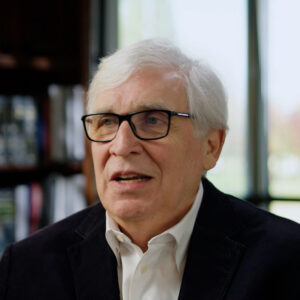
Michael Hackard is the founder of Hackard Law, a California trust and estate litigation firm with more than five decades of experience protecting the inheritance rights of families across Sacramento, the San Francisco Bay Area, and Los Angeles. He is the author of four published books on inheritance protection and has produced more than 1,000 educational videos with over seven million views.



 (916) 313-3030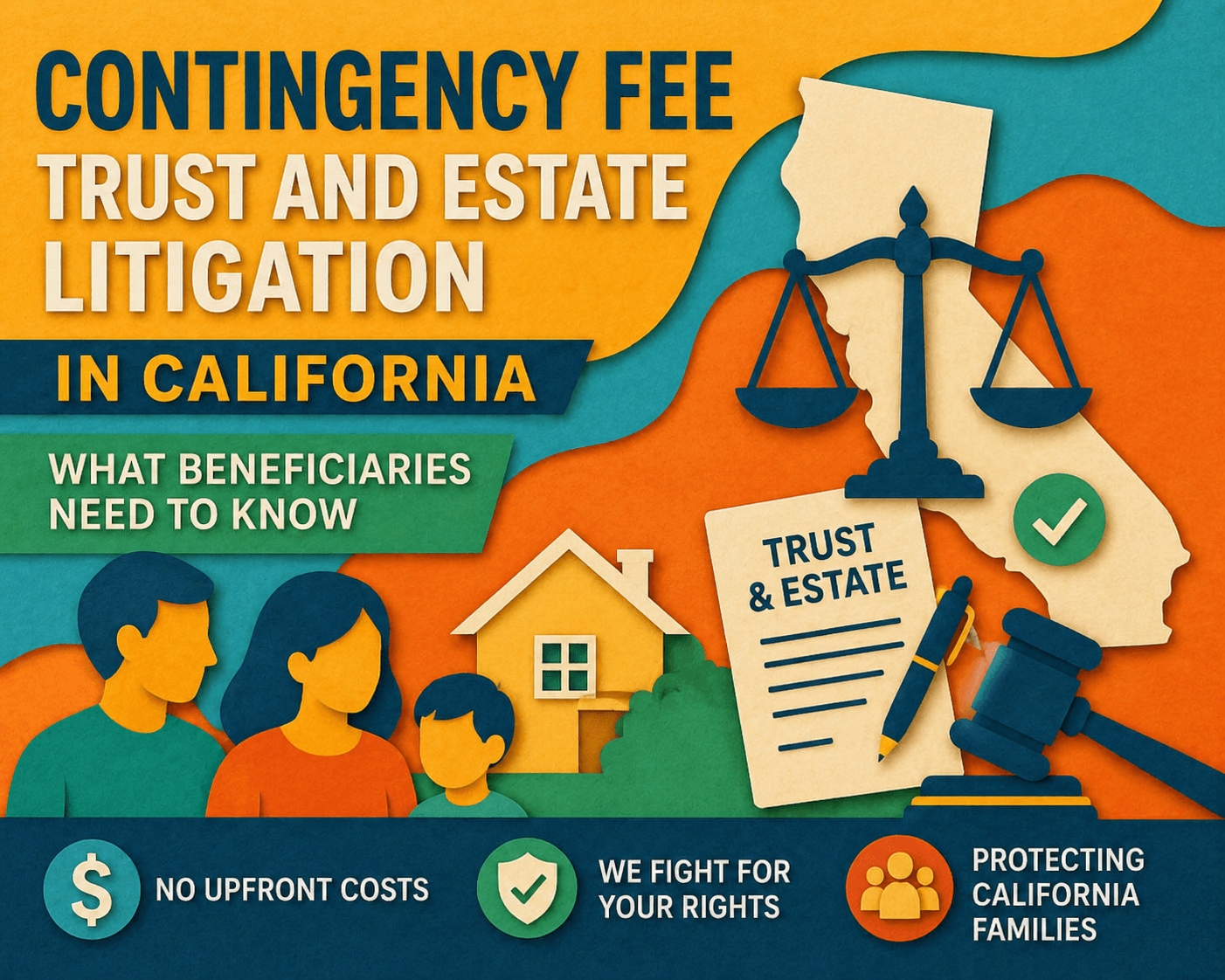

 Michael Hackard is the founder of Hackard Law, a California trust and estate litigation firm with more than five decades of experience protecting the inheritance rights of families across Sacramento, the San Francisco Bay Area, and Los Angeles. He is the author of four published books on inheritance protection and has produced more than 1,000 educational videos with over seven million views.