


 (916) 313-3030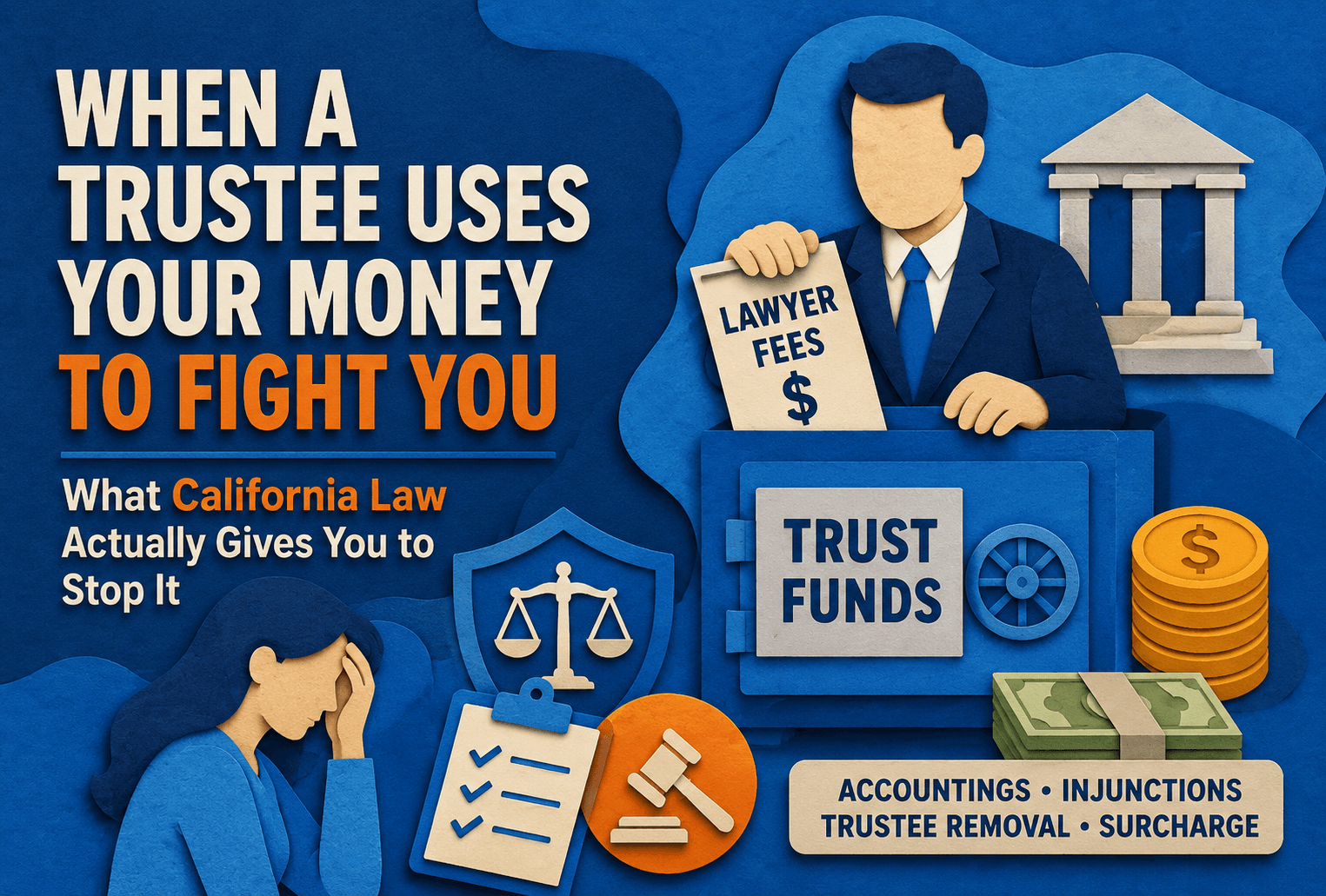
When a Trustee Uses Trust Funds to Fight Beneficiaries in California

Suppose you discovered that the trustee managing your parents’ estate had been withholding your distributions, making suspicious transfers to themselves, and stonewalling every request for documents. You decide to challenge them in court. And then you find out they have hired a team of expensive attorneys to fight you — paid for entirely with trust funds. The same trust funds that were supposed to come to you.
This is the litigation war chest problem, and it is one of the most corrosive dynamics in California trust litigation. You are not just fighting someone who wronged you. You are fighting someone who is using your inheritance to make sure they win.
We have seen this pattern at Hackard Law across decades of representing California beneficiaries. It is not always accidental. In some cases, it is the strategy from the beginning — a calculated bet that if the trustee can sustain litigation long enough, the beneficiaries will run out of money, patience, or both before accountability ever arrives.
The Cruelest Trick in Trust Litigation
Think about what this looks like from the outside. A trustee is accused of misappropriating trust assets. The beneficiaries who were harmed decide to fight back. But the trustee controls the accounts. So they reach into the trust, pull out whatever they need, and fund a defense that can last years. The very money that was taken from you is now being used to argue in court that it was not taken from you at all.
In the criminal justice system, this would be unthinkable. A bank robber cannot pay their defense attorneys with the stolen money, not because the law forgot to address it, but because courts would never tolerate such an obvious inversion of justice. Trust litigation, absent court intervention, can produce exactly this result.
The analogy is imperfect, of course, because trustees are not always thieves in the criminal sense. But when a trustee has breached their fiduciary duty, withheld distributions, engaged in self-dealing, misappropriated assets, and then reaches into those same trust assets to mount their legal defense, the structural injustice is real, and the courts have the power to stop it.
Why Trustees Get Away With This
California law requires trustees to administer the trust solely in the interest of the beneficiaries. Under California Probate Code § 16002, the duty of loyalty is not aspirational. It is the law. A trustee cannot use their position for personal gain, cannot self-deal, and cannot place their own interests above the people the trust was created to serve.
So why does the litigation war chest problem exist at all? Because the trustee controls access to the trust’s financial accounts and, absent a court order restricting that access, can draw on those funds while litigation proceeds. Beneficiaries who have been denied their distributions are left fighting from their own pockets while the trustee fights from yours.
This structural imbalance is not subtle. We have watched it play out across hundreds of cases. A wrongdoing trustee with access to a substantial trust can retain high-quality legal counsel, sustain years of procedural delay, and make the litigation so expensive and exhausting that beneficiaries give up before the case ever reaches its merits. By the time the court would have found in the beneficiaries’ favor, the trust is partially depleted, and the trustee has already gotten what they wanted.
The longer this goes on without intervention, the worse the outcome for everyone the trust was meant to protect. You can read more about how these disputes unfold in our overview of trust and estate litigation and what beneficiaries are entitled to expect from the process.
The Legal Reality Most Beneficiaries Do Not Know
A trustee’s right to use trust funds for their own legal defense is not absolute.
Many beneficiaries arrive at our office believing that the trustee has an unconditional right to be defended from trust assets, that this is simply the cost of trust administration. It is not. The right to indemnification from the trust is conditioned on the trustee having acted in good faith and in accordance with their duties. When a trustee has breached those duties, particularly through misconduct or self-dealing, the legal basis for drawing on trust funds to cover their defense may not withstand court scrutiny.
California probate courts can deny indemnification to a trustee who has acted in bad faith. They can order a trustee to personally repay legal fees already drawn from the trust. They can restrict further use of trust assets during pending litigation. And they can impose a surcharge, which forces the trustee to make the trust whole, out of their own pocket, for damages caused by the breach.
These are not theoretical remedies gathering dust in the California Probate Code. They are tools that courts apply when beneficiaries move quickly and with well-prepared legal support. The question is whether you act before the war chest is empty.
What California Law Actually Gives You
Demand a Formal Accounting
California beneficiaries have a statutory right to demand a formal accounting of trust assets. This is often the first and most important move. A formal accounting compels the trustee to document how trust funds have been received, managed, and disbursed. When a trustee uses trust funds to pay their own attorneys, an accounting will show it, and the resulting paper trail can become central evidence in every subsequent proceeding. If you are having trouble getting information from your trustee, our post on what beneficiaries can do when a trustee delays without cause explains the legal pressure points available to you.
Petition for Injunctive Relief or a TRO
Emergency relief is the most powerful timing tool in a beneficiary’s arsenal, and it is one that too many people wait too long to seek. An experienced attorney can petition the court for a Temporary Restraining Order that restricts the trustee’s use of trust funds for legal defense while litigation is pending. Under California Probate Code § 15642(e), courts also have the authority to appoint a temporary trustee when a sitting trustee’s continued control poses a risk to the trust estate.
Seeking this relief early can dramatically shift the balance of power. The trustee who planned to outlast you financially suddenly finds that the war chest has been sealed off by court order, and the litigation they counted on winning through exhaustion now has to be won on the merits.
Seek the Trustee’s Removal
Removal is often the central remedy in cases of serious trustee misconduct, and it is worth pursuing alongside every other tool available. California probate courts have broad authority to remove a trustee for cause, including breach of fiduciary duty, misappropriation of trust assets, and failure to act in the beneficiaries’ best interests. A removed trustee can be replaced with a professional neutral who has no personal stake in the litigation outcome.
For more on what removal proceedings involve and when courts are willing to grant them, our trust litigation resources for California beneficiaries cover the process in detail.
Pursue Surcharge and Disgorgement
Surcharge is the mechanism by which a court holds a trustee personally accountable for the financial damage their breach caused. If the trustee drew down trust funds to pay their attorneys and those fees are later found to have been improperly drawn, the court can require the trustee to personally restore that amount to the trust. Disgorgement goes further: it requires the trustee to give back any gains they obtained through the breach. For a fuller picture of what financial accountability looks like in these cases, our overview of civil remedies for elder financial abuse addresses the overlapping remedies available when a fiduciary has misused their authority.
Understand Your Fee Options
One of the most cynical features of the litigation war chest strategy is the implicit message it sends: we have the resources to fight forever, and you do not. Many beneficiaries believe this and walk away from valid claims because they cannot afford the hourly rates required to sustain years of trust litigation against a well-funded opponent.
We represent qualifying clients on a contingency basis, which means we receive our fees only when we make a recovery for you. No recovery, no fee. A wrongdoing trustee should not be able to use control over trust assets to price beneficiaries out of justice. If you want to understand how fee arrangements work in these cases, our post on contingency representation in California trust litigation explains the options in plain terms.
Why Timing Is Everything
Every week that passes while a wrongdoing trustee retains control of trust assets is another week those assets can be spent on attorney fees, transferred to third parties, or obscured behind increasingly complicated records. The trust that existed when the beneficiary first suspected misconduct may look very different by the time the case is resolved without early intervention.
Speed changes the math in every direction. A TRO or interim accounting sought in the early stages of litigation can expose the trustee’s use of funds before the damage compounds. A removal petition filed promptly denies the trustee the runway to further entrench themselves. And when the trustee loses control of the trust accounts early, they are suddenly litigating on the same financial footing as the beneficiaries they wronged, without the advantage that made the war chest strategy viable in the first place.
We always tell clients who come to us suspecting trustee misconduct: whatever you do, do not wait to see how this plays out. The longer the delay, the fewer options the court has to make you whole.
What to Do Right Now
If your trustee is spending trust money on attorneys while your distributions are being withheld or delayed, you may have grounds to stop it. That means gathering all the documentation you have: trust documents, bank statements, correspondence from the trustee, and records of withheld distributions. It means consulting a trust litigation attorney who understands this specific dynamic and can assess whether emergency relief is warranted. And it means understanding that the power imbalance you feel right now is real but not permanent.
California courts have the tools to level the playing field. The variable is whether you move before the trust is depleted. If you are ready to talk about your situation, contact Hackard Law for a free consultation. We have spent decades watching this pattern repeat, and we know how to interrupt it.
 Michael Hackard is the founder of Hackard Law, a California trust and estate litigation firm with more than five decades of experience protecting the inheritance rights of families across Sacramento, the San Francisco Bay Area, and Los Angeles. He is the author of four published books on inheritance protection and has produced more than 1,000 educational videos with over seven million views.