Every child remembers the boogeyman. For me, it was a gorilla who lurked in the closet, hid under the bed, and sometimes crept into the dining room. The fear was powerful because it relied entirely on imagination. As adults, most of us leave that fear behind — but certain legal provisions carry the same quality of manufactured dread. I’m Michael Hackard, founder of Hackard Law, and over five decades of practicing California trust and estate litigation, I have watched no contest clauses operate as a kind of legal boogeyman, designed to scare heirs, beneficiaries, and elder abuse victims away from challenging wrongdoing. I have authored four published books on inheritance protection and produced more than 1,000 educational videos with over seven million views, all aimed at helping families in Sacramento, the San Francisco Bay Area, and Los Angeles understand their rights. A no contest clause should never silence someone who has been cheated out of an inheritance — and California law agrees.
Hackard Law provides contingency fee representation for qualified cases, meaning families pay no upfront legal costs to pursue their claims.
If a no contest clause is being used to keep you from challenging a suspicious trust or will, call Hackard Law at (916) 313-3030 for a free consultation.
Quick Summary: No Contest Clauses and the Probable Cause Standard
No contest clauses (also called in terrorem clauses) threaten disinheritance if a beneficiary challenges a will or trust. California’s Probate Code limits their reach by requiring courts to apply a probable cause standard before enforcing them. Heirs, beneficiaries, and elder abuse victims should understand that these clauses do not provide blanket protection for estate wrongdoing.
A no contest clause penalizes a challenger by taking away their portion of the estate in the event that they are unsuccessful.
Section 21311 of the California Probate Code limits the penalty when probable cause is present and limits enforcement to direct contests.
According to the probable cause standard, the no contest clause cannot be enforced if a reasonable person would think the challenge has merit.
Many trust and will challenges proceed successfully despite the presence of a no contest clause.
Those who manipulate vulnerable elders should take little comfort from these clauses.
What Is a No Contest Clause?
A no-contest clause is a provision in a will or trust that threatens to disinherit any beneficiary who challenges the document. The language typically states: “If any beneficiary contests this trust, that beneficiary shall receive nothing.” Some versions reduce the challenging beneficiary’s share to one dollar. The intent is straightforward — to deter litigation.
In estate planning, these provisions have a lengthy history. Attorneys creating wills and trusts use them as a deterrent, and they often have a good reason. A trustee may genuinely want to prevent family feuds over minor distribution differences. No-contest clauses become problematic when used as a safeguard against elder financial abuse, fraud, or undue influence.
California law recognizes this tension. The Legislature has repeatedly acted to ensure that no contest clauses do not become a tool for those who manipulate vulnerable adults. Under current law, a no contest clause can only be enforced against a “direct contest” brought without probable cause. That single limitation changes the entire landscape for families who suspect wrongdoing.
How California’s Probable Cause Standard Protects Challengers
The probable cause standard is the key legal principle that limits the power of no contest clauses in California. Under Probate Code section 21311, a no contest clause is only enforceable if the contest is a direct challenge to the instrument and the challenger lacks probable cause.
Probable cause exists when the facts known to the challenger, at the time the contest is filed, would lead a reasonable person to believe there is a legitimate basis for the challenge. Courts do not require certainty. They require a rational foundation — evidence or circumstances suggesting fraud, undue influence, lack of capacity, or other grounds for invalidity.
This standard gives meaningful protection to heirs, beneficiaries, and elder abuse victims. It means that a family member with credible evidence of wrongdoing can move forward with a challenge without risking losing everything. The no contest clause does not vanish, but its teeth are significantly dulled when the challenger acts on reasonable grounds.
Case Pattern: The Pressured Trust Amendment
A family discovered that their elderly father, who had been diagnosed with moderate cognitive decline, executed a trust amendment leaving his entire estate to one adult child — the same child who had been living in the home and controlling access to medical care. Three siblings filed a contest. Despite a no-contest clause, the court found probable cause based on medical records and witness accounts. The clause did not stop the challenge from proceeding.
The Real Threats No Contest Clauses Should Not Protect
No contest clauses were never intended to protect wrongdoing. Michael Hackard identifies recurring patterns where bad actors attempt to hide behind these provisions.
A son battling substance abuse may isolate a vulnerable mother and pressure her into changing her trust to leave everything to him. A caretaker may control every aspect of an elderly person’s life — food, medication, transportation — and then arrange for a new will that leaves the family home to the caretaker and leftovers to the elder’s children. A daughter living with her mother, suffering from Alzheimer’s disease may convince her to execute a trust amendment cutting out three other siblings entirely.
In each of these scenarios, the the person who acted wrongfully may point to a no contest clause and say, “Challenge this and you’ll get nothing.” Hackard Law does not accept that framing. When credible evidence of estate wrongdoing exists, the probable cause standard provides a clear path forward for families.
The no contest clause should not function as a get-out-of-jail-free card for those who exploit the elderly or manipulate estate documents. California courts have consistently recognized this principle.
Building a Strong Challenge Despite a No Contest Clause
Families facing a no contest clause need to approach the challenge methodically. The first step is gathering evidence before filing. Medical records documenting cognitive decline, witness statements about isolation or control, financial records showing unusual transactions — all of this builds the foundation of probable cause.
Hackard Law conducts a thorough pre-filing investigation in every case. The goal is to establish, before any petition reaches the court, that a reasonable person would conclude the challenge has merit. This preparation protects the client from any argument that the contest was filed recklessly or without basis.
Once the challenge is filed, discovery opens additional avenues. Depositions of the drafting attorney, examination of the circumstances surrounding document execution, and review of the decedent’s financial history often reveal patterns that strengthen the case further. Families who understand the process of contesting a trust in California position themselves for better outcomes.
Case Pattern: The Caretaker’s New Will
An elderly widow’s longtime caretaker transported her to an attorney the caretaker had selected. A new will was executed leaving the family home to the caretaker. The widow’s adult children discovered the change only after their mother passed. Despite a no contest clause in the new will, the children filed a contest supported by evidence of the caretaker’s control over the widow’s daily life and choice of attorney. The court determined probable cause existed and allowed the challenge to proceed.
Why Those who have acted wrongfully Rely on the Boogeyman
Those who manipulate estate documents count on fear. They understand that a no contest clause creates a psychological barrier for families who might otherwise step forward. The message is calculated: “If you fight this, you lose everything you were promised.”
This tactic works when families do not understand the law. It fails when families consult with attorneys who litigate trust and estate disputes and know how California’s probable cause standard operates. Hackard Law has challenged contested wills and trustsacross California, and the firm’s consistent approach is to evaluate the evidence, assess probable cause, and move forward when the facts support a challenge.
The boogeyman loses its power once you understand it. A no contest clause is a legal provision — not an impenetrable wall. California families deserve to know that the law provides a path to hold those who have acted wrongfully accountable, even when a no contest clause stands in the way.
Key Definitions
No Contest Clause (In Terrorem Clause): A provision in a will or trust that threatens disinheritance if a beneficiary challenges the document.
Probable Cause: The legal standard requiring that a reasonable person, knowing the facts available to the challenger, would believe the contest has merit.
Direct Contest: A challenge that directly attacks the validity of a will or trust instrument, as opposed to ancillary claims.
Undue Influence: Excessive pressure or manipulation that overcomes a person’s free will in executing or amending an estate document.
Testamentary Capacity: The mental ability of a person to understand the nature of their estate, their natural heirs, and the consequences of signing a will or trust.
Probate Code Section 21311: The California statute that limits enforcement of no contest clauses to direct contests filed without probable cause. Families should understand what California beneficiaries should know about their rights under this framework.
Trust Amendment: A change to the terms of a living trust, which may alter beneficiary shares or trustee appointments.
Elder Financial Abuse: The illegal or improper use of an elder’s funds, property, or assets, often through manipulation or exploitation.
Discovery: The legal process by which parties exchange evidence, take depositions, and obtain documents relevant to a dispute.
Disinheritance Penalty: The loss of a beneficiary’s share under a will or trust as a result of triggering a no contest clause.
What to Do Next
Compile all estate documents that are available, such as the most recent will, the original trust, and any amendments.
Gather medical records that detail the decedent’s cognitive state at the time of any questionable alterations.
Keep track of any instances where the person who benefited from the changes was isolated, controlled, or exploited financially.
Keep track of any unusual gifts, withdrawals, or transfers made during the suspected wrongdoing period.
Identify witnesses who can speak to the decedent’s mental state, relationships, and any pressure or manipulation they observed.
Consult with a California trust and estate litigation attorney who understands contingency fee representationand the probable cause standard.
Do not delay — statutes of limitations and evidence preservation deadlines apply to trust and will contests.
Keep a written timeline of key events, including dates of document changes, hospitalizations, and caretaker involvement.
The blog focuses heavily on how no contest clause language operates in California wills and trusts, making this video on trust and will language disputes a direct topical match.
Directly complements the blog’s core subject — challenging a trust despite a no contest clause. Readers weighing a contest will immediately benefit from understanding the standing requirements.
The blog emphasizes pre-filing investigation and establishing probable cause. This video speaks directly to readers, asking whether their trust or will challenge has merit — a central concern when a no-contest clause is present.
The blog explicitly uses a substance-abusing son isolating a vulnerable mother as a prime example of wrongdoing that no contest clauses should not protect. This video directly mirrors that scenario.
The blog repeatedly addresses elder financial abuse and caretaker exploitation as the very wrongdoing no contest clauses should never shield. This video on senior exploitation is a strong thematic match.
The blog’s audience is beneficiaries worried about losing their inheritance share due to a no contest clause. This video on whether California trust beneficiaries are protected speaks directly to their concerns.
Frequently Asked Questions
No. Under California Probate Code section 21311, a no contest clause cannot be enforced against a challenger who files a direct contest with probable cause. If you have credible evidence that the trust was the product of fraud, undue influence, or lack of capacity, the clause does not bar your challenge. The law protects those who act on reasonable grounds.
If a court determines that your contest was a direct challenge filed without probable cause, the no contest clause may be enforced. This could result in the loss of your share under the trust or will. This is why thorough pre-filing investigation matters — it establishes the factual foundation that satisfies the probable cause requirement before a petition is filed.
Not necessarily. California law limits enforcement of no contest clauses to direct contests — challenges that directly attack the validity of the instrument itself. Other types of actions, such as petitions to compel an accounting or claims for breach of fiduciary duty, generally do not trigger no contest clauses. Each situation requires careful legal analysis.
Hackard Law conducts detailed pre-filing investigation. This includes reviewing medical records, financial documents, witness accounts, and the circumstances surrounding the execution of the disputed document. The firm assesses whether the available evidence would lead a reasonable person to conclude the challenge has merit. Only when that standard is met does the firm proceed with filing.
California law does not allow no contest clauses to shield elder financial abuse. When a caretaker or family member has manipulated a vulnerable adult into changing estate documents, the probable cause standard ensures that affected heirs and beneficiaries can pursue their claims. Courts take these patterns seriously, and the no contest clause does not override California’s strong protections against elder exploitation.
About the Author
Michael Hackard is the founder of Hackard Law, a California trust and estate litigation firm with more than five decades of experience protecting the inheritance rights of families across Sacramento, the San Francisco Bay Area, and Los Angeles. He is the author of four published books on inheritance protection and has produced more than 1,000 educational videos with over seven million views.



 (916) 313-3030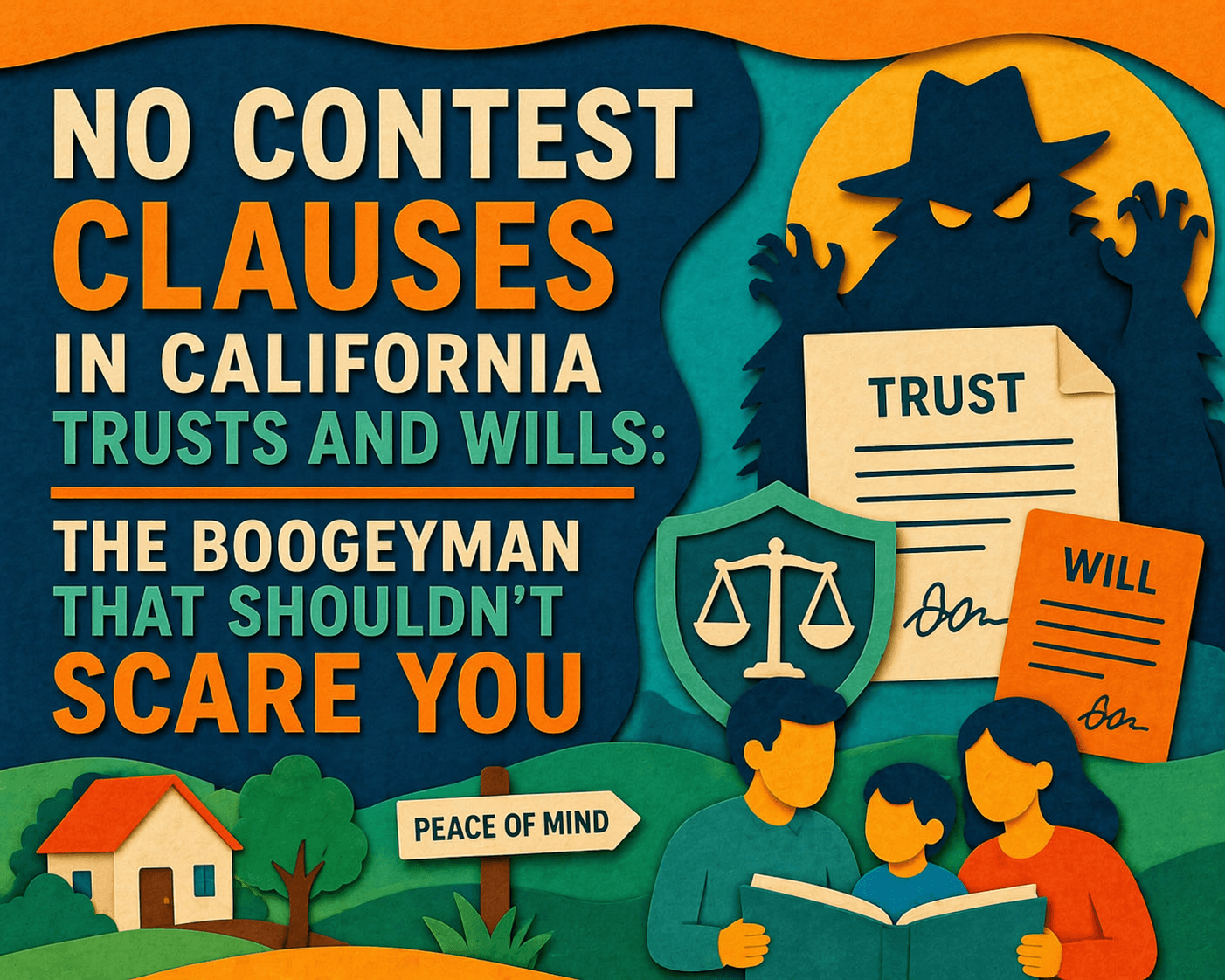

 Michael Hackard is the founder of Hackard Law, a California trust and estate litigation firm with more than five decades of experience protecting the inheritance rights of families across Sacramento, the San Francisco Bay Area, and Los Angeles. He is the author of four published books on inheritance protection and has produced more than 1,000 educational videos with over seven million views.